


Matthieu Blazy’s Chanel Spring/Summer 2027 collection offered moments of exceptional craftsmanship, but also raised a question that technical achievement alone cannot answer: how far can Chanel change while keeping the identity that makes it distinctive?
Presented at the Grand Palais on October 5, the collection approached the house’s vocabulary with greater lightness and sensuality. Transparent fabrics, cropped jackets and moving skirt panels suggested a wardrobe less concerned with formality. Chanel’s own presentation emphasised freedom through eased tailoring and innovative textile development, including smocked tweed.
Craftsmanship stood out in several pieces. The reworking of tweed into more open structures, alongside intricate surface treatments, demonstrated the possibilities of Chanel’s ateliers. These were among the collection’s most convincing moments: familiar materials acquired new texture and movement, giving the house’s technical expertise a visible purpose beyond decoration.
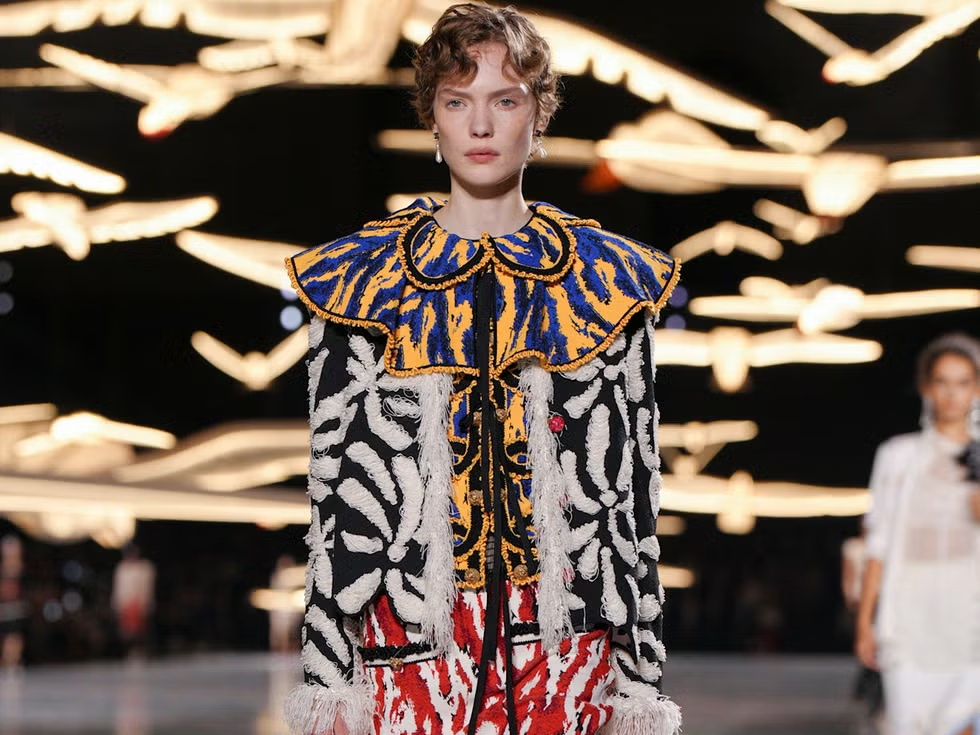
Chanel Fall 2026
Elsewhere, however, the connection to Chanel felt considerably weaker. Some pieces, particularly those built around clashing colours and exuberant pattern combinations, seemed to have little relationship with the house’s identity. Bold colour is hardly foreign to Chanel, especially under Karl Lagerfeld, but experimentation still needs an aesthetic logic. Here, certain combinations appeared more concerned with surprise than with developing a recognisable Chanel sensibility.
The reduced emphasis on accessories also changed the collection’s character. Bags and two-tone shoes remained present, yet many looks felt comparatively bare, with much of the familiar accessory layering missing. That absence matters because Chanel’s identity has never rested on clothing alone. Pearls, chains, brooches, belts and costume jewellery have helped make its silhouettes immediately recognisable.
Lagerfeld understood the expressive power of those elements. He repeatedly amplified them, using accessories to bring humour, excess and contemporary attitude to the house’s established wardrobe. They helped connect even his more adventurous propositions to Chanel. Without that density of styling, some of Blazy’s looks seemed to lose an important part of the visual language.
There is a legitimate argument for allowing the clothes more space. Lighter styling can reveal construction and make a historic brand feel less prescribed. But simplicity becomes less persuasive when the garments themselves already seem distant from the identity they are meant to extend.
Taken together, these choices suggest that Blazy is trying to change Chanel as we know it. His direction is becoming visible in the proportions, colour combinations and reduced reliance on familiar styling codes. The strongest pieces show how craftsmanship can support that evolution, while the collection as a whole suggests that Blazy is beginning to establish his own interpretation of Chanel.
How that vision will develop, and which elements will become part of the house’s lasting vocabulary, remains an open question. For now, Spring/Summer 2027 offers a glimpse of a Chanel still taking shape under his direction.